
So, what is peat exactly?
A brief introduction to peat soils, peat fossils, and moss piglets

This blog is all about peat and peatlands, but unless you use peat compost in your garden or happen to live or work close to or within boggy landscapes, you may be wondering what peat is exactly.
Firstly, peatlands are wetlands. Like other wetlands, the ground is saturated with water, and this waterlogged land is covered in plants that are adapted to grow in wet conditions. The distinction between peatlands and other types of wetlands is the formation of peat soils over hundreds to thousands of years.
So, what is peat? The answer is simple – peat is wet soil made of dead plants.
Most soils have some form of dead plant material – or organic matter - in them. For example, productive agricultural soils may have as much as ~3 to 5% organic matter. And other wetlands usually have some organic matter in their mineral-rich soils. But in peat soils at least 20% is organic matter, and usually, the portion of organic material is much more.
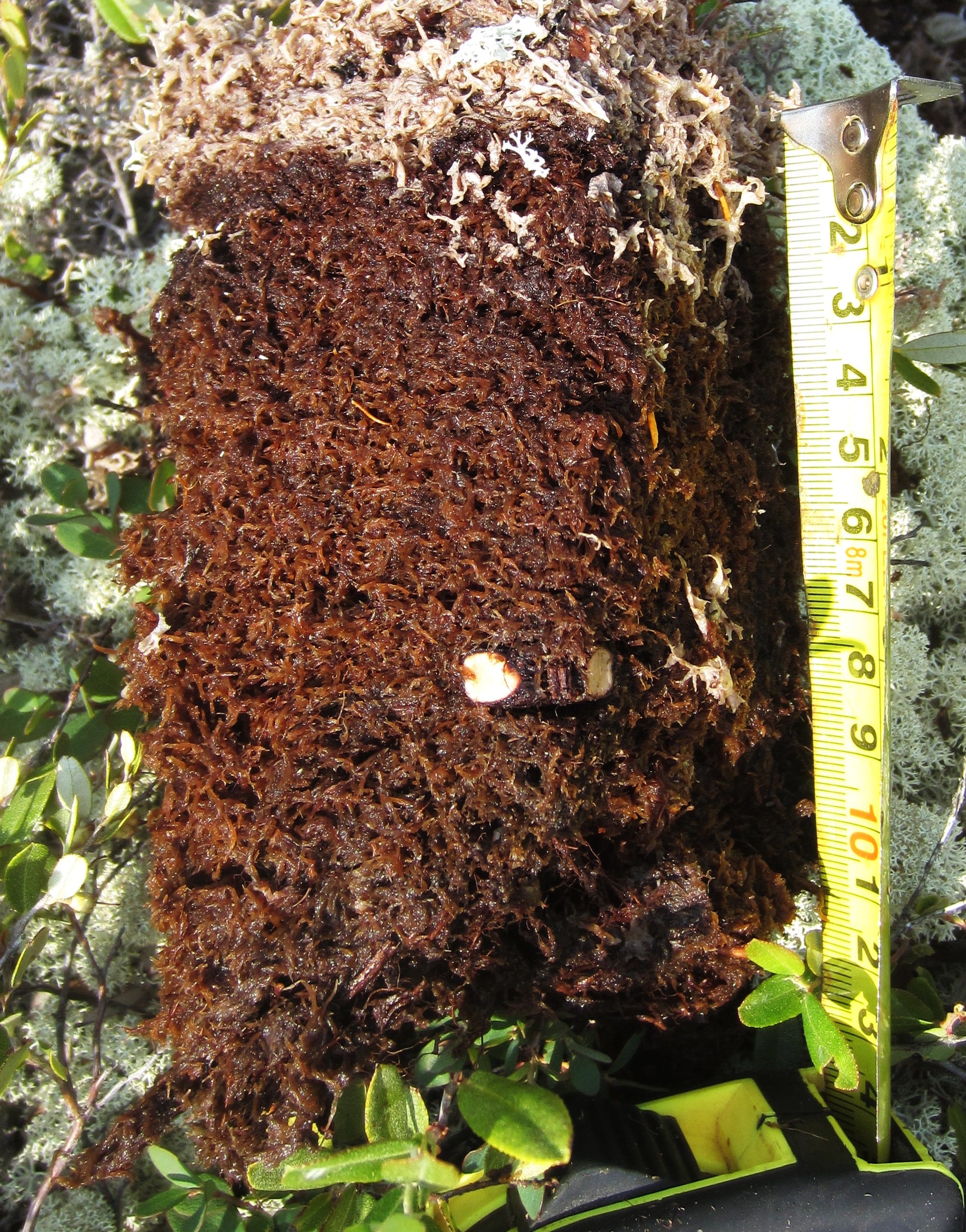
The dead plant matter in some peat soils is often well preserved and visually distinct, like other fossils of once-living organisms. It is possible to identify the type or even the species of ancient peat fossils found in peat cores almost as easily as the living plants above ground. Scientists can identify larger plant fragments – called macrofossils - that were buried thousands of years ago to understand how the peatland has developed over time. And by looking more closely at microfossils, such as pollen and spores, the entire history of the peatland can be revealed, giving us important insights into past environmental change and climate.
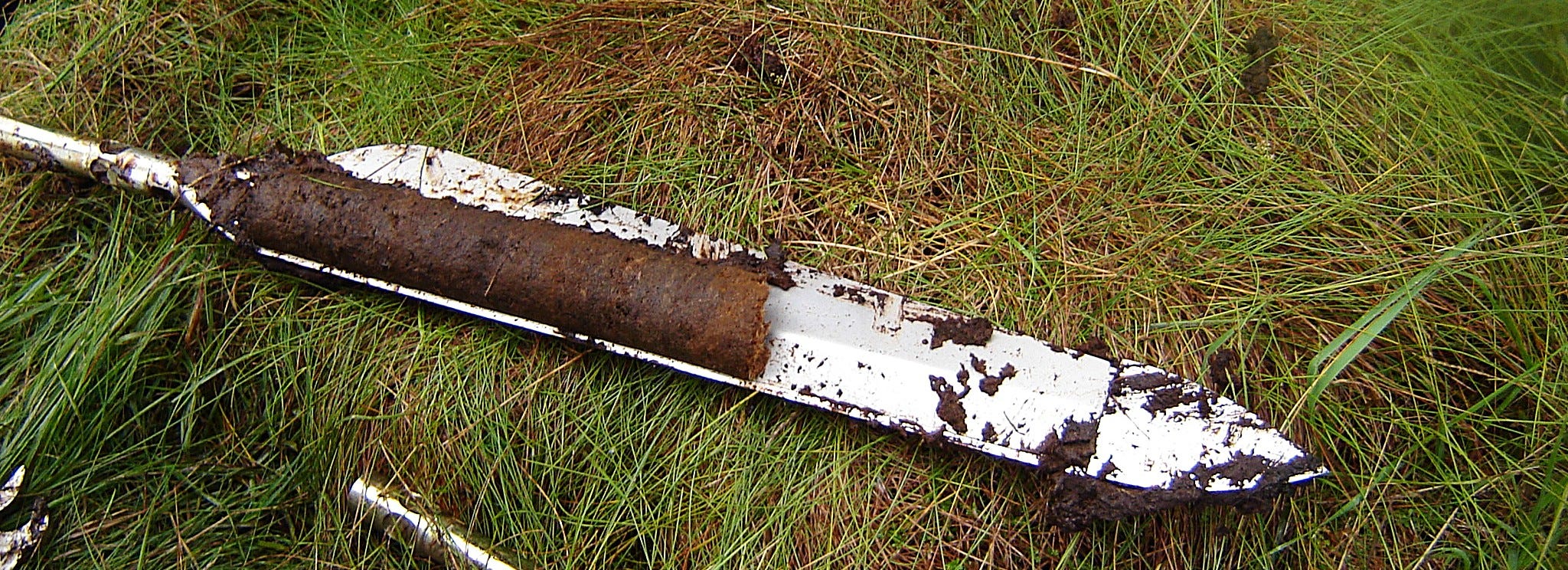
So, why are these dead plants in peatlands not just rotting away like they do in other soils? The plants are actually decaying but this process is just very slow. The wet and waterlogged soil creates a low oxygen environment that slows down microbial activity – the microbes are munching away at the dead plants and breaking them down but very slowly. Because of this slow decay, the remains of a plant that was growing in a bog thousands of years ago may remain relatively intact as it is gradually buried deeper into the peat soil.
In many peatlands the acidic waters created by the production of organic acids from decaying peat slow the decay of the dead plants even more. These acidic conditions can cause a lot of organic material to build up in one spot over time. The depth of peat can range from as little as 20 to 30 cm in some younger peatlands or where environmental conditions may slow or prevent peat accumulation (e.g., subarctic locations with short growing seasons and cold frozen ground), to several metres, and even up 10 m or more in some northern peatlands. In some tropical peatlands, where peat has been building up for much longer (e.g., over ~42,000 years in the Congo and ~47,000 years in Borneo!) than in northern peatlands (over ~10,000 years, present-day peatlands started to develop after the glaciers retreated) depths of 18 m have been recorded.
Sphagnum moss dominated bogs where the only water input is from rain or snow are the most acidic peatlands. The tiny and beautiful Sphagnum mosses are relatively resistant to decay and are known as ‘bog-builders’ because their growth over time can create large and distinctive peat landforms. These mosses are also actively acidifying their environment through ion exchange.
Sphagnum peat is probably the most known type of peat because it is unfortunately still sold in bags as compost for our gardens (more on this issue in a future post!). But peat can be made of other plants, including sedges and woody plants (trees and shrubs). The type of peat soil depends on the species of plants that grow and then die in the wetland.
Fen peatlands in northern regions are dominated by sedges (grass-like species usually in the genus Carex) and so the peat soils that form are described as sedge peat. In tropical peat swamps with dense tree cover and roots the peat soils are very woody. And in other regions with unique species, unique peat soils may form, such as the restiad bogs of New Zealand where tall rush-like plants in the family Restionaceae (e.g., Empodisma minus and Sporadanthus spp.) grow and form peat.
And there are more than just dead plants in peat soils – the wet ground preserves all organic matter, including animal remains… While it is always a worry during field surveys that I will occasionally come across a partially decayed corpse of the wildlife that once made peatlands their home, the majority of animal remains in peat soils are tiny beasties that can only be seen under the microscope. Including water bears! Tardigrades – or moss piglets – are microscopic animals that thrive in moist habitats, such as wet peat soils and moss-rich bogs. In addition to the moss piglets, wriggling away among the tiny leaves of the small mosses, are many thousands of mites, testate amoeba, nematodes, and other critters. There are many stories to tell about these bog-loving creatures in future posts, and I certainly think moss piglets deserve a post dedicated entirely to them! Watch this space!
References
Cornell University (2008). Soil Organic Matter – Fact Sheet 41. Agronomy Fact Sheet Series. Available at: https://franklin.cce.cornell.edu/resources/soil-organic-matter-fact-sheet
Lourenco, M., et al. (2022). Peat definitions: A critical review. Progress in Physical Geography: Earth and Environment, 47, 4. https://doi.org/10.1177/03091333221118353
Rydin, H., and Jeglum, J.K. (2013). Chapter 6 - The peat archives. In: The Biology of Peatlands (2nd edition). Oxford, online edition: https://doi.org/10.1093/acprof:osobl/9780199602995.003.0006
Dasgupta, S., et al. (2015). Geochemical mixing in peatland waters: The role of organic acids. Wetlands, 35, 567-575. https://doi.org/10.1007/s13157-015-0646-2
Dargie, G.C., et al. (2025). Timing of peat initiation across the central Congo Basin. Environmental Research Letters, 20, 084080. https://iopscience.iop.org/article/10.1088/1748-9326/ade905
Ruwaimana, M., et al. (2020). The oldest extant tropical peatland in the world: a major carbon reservoir for at least 47,000 years. Environmental Research Letters, 15, 114027. https://iopscience.iop.org/article/10.1088/1748-9326/abb853
van Breemen, N. (1995). How Sphagnum bogs down other plants. Trends in Ecology and Evolution, 10, 270-274. https://doi.org/10.1016/0169-5347(95)90007-1
Clarkson, B.R., et al. (2004). Vegetation and peat characteristics in the development of lowland restiad peat bogs, North Island, New Zealand. Wetlands, 24, 133-151. https://doi.org/10.1672/0277-5212(2004)024[0133:VAPCIT]2.0.CO;2
Mӓenpӓӓ, H., et al. (2024). A first look into moss living tardigrades in boreal peatlands. Ecology and Evolution, 14, 8. https://doi.org/10.1002/ece3.70045